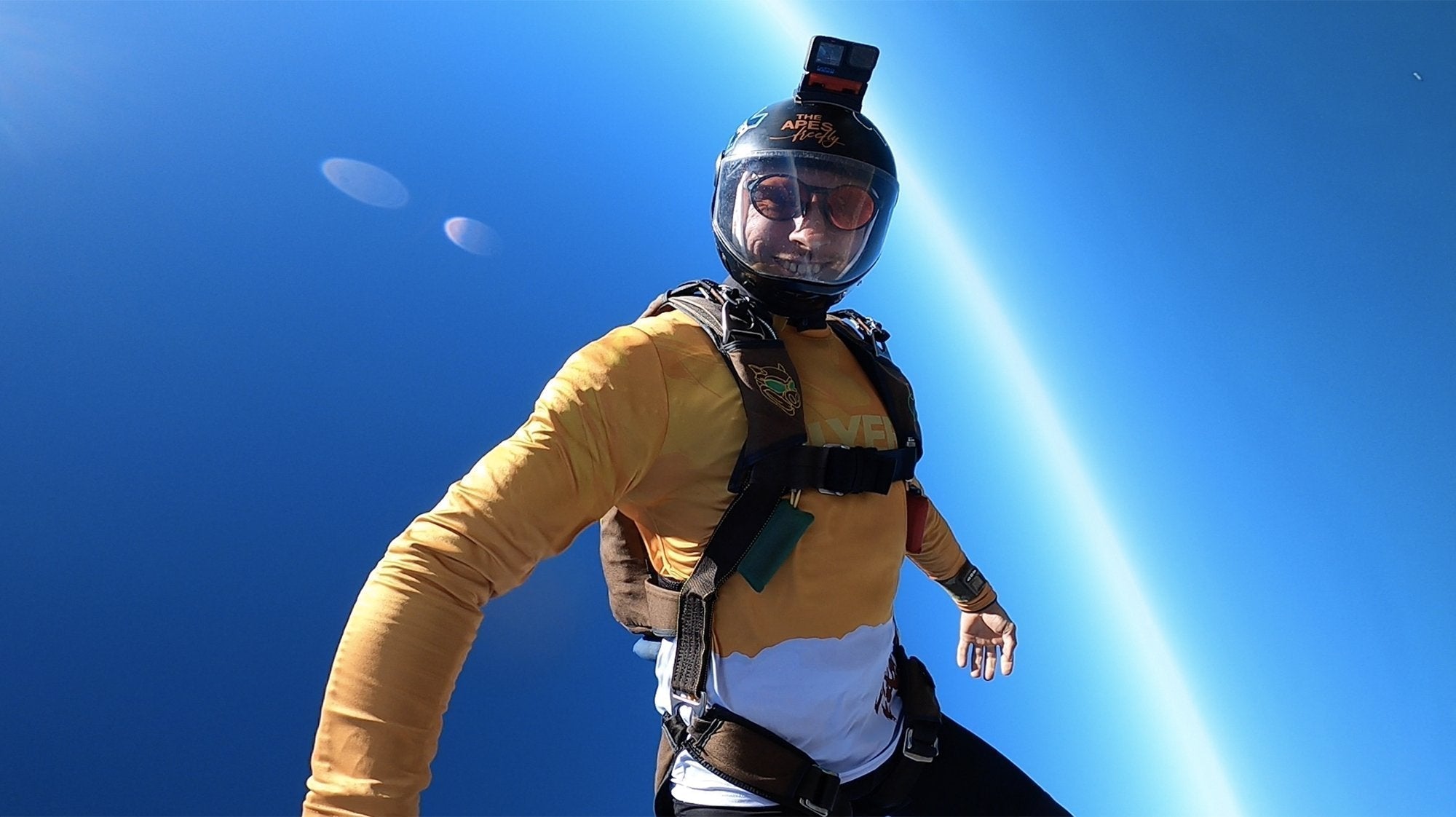
It is a common question, especially among newer jumpers. Can you skydive in a regular T-shirt? In many dropzones, you will see people doing exactly that. A T-shirt is familiar, comfortable, easy to wear, and in warm weather it can feel like the most natural choice. But the better question is not simply whether you can wear one. The better question is whether that T-shirt stays where it should once you are geared up, moving around, and preparing for a real jump.
A regular T-shirt is everyday apparel. Skydiving puts it into a different environment.
What changes once you are geared up
On the ground, a T-shirt may feel completely normal. Under a harness, things change. The fabric can shift. The waist can ride up. The shirt can bunch, fold, twist, or sit differently than expected. A loose cotton T-shirt may feel comfortable before the jump, but once it becomes part of the full setup, it can behave less consistently. This does not mean every T-shirt is a problem. It means the shirt needs attention.
Before a jump, your clothing should be worn correctly, checked properly, and kept tidy around your gear. That is part of good preparation, whether you are wearing a T-shirt, jersey, hoodie, suit, or any other layer. If your shirt tends to move, ride up or feel awkward under gear, this guide explains why shirt movement during skydiving is worth taking seriously.
Start with the simple rule
If you wear a T-shirt, tuck it in properly. That may sound basic, but it is still one of the most practical habits. A loose shirt has more room to move. A cleanly tucked shirt gives the fabric a better chance of staying controlled under gear. This matters even if the shirt is long. It matters even if the fabric feels comfortable.
And it still matters if you are wearing apparel with a more considered cut. Good design can help, but it does not replace correct wear. Before the jump, check how the shirt sits. Make sure it is not bunching under the harness, pulling awkwardly, or sitting in a way that could become uncomfortable later. If something feels off, fix it early. Small clothing details are easier to solve before they become distractions.
Why fit matters
The fit of the shirt makes a big difference. A very loose T-shirt has more fabric that can move around. A very short T-shirt may ride up more easily. A shirt that is too tight may feel restrictive or uncomfortable during a long day at the dropzone. The most useful fit is usually the one that feels natural, stays tidy, and does not require constant attention. That is where many regular T-shirts fall short.
They are made for everyday movement, not for being worn under skydiving gear. They may still work, but they were not designed around that situation. This is why some jumpers eventually move toward jerseys or longer, closer-fitting apparel. Not because a jersey is magic, because fit, length and fabric can make the clothing easier to manage.
Cotton versus jersey-style fabrics
Cotton T-shirts are comfortable and familiar. They can be great around the dropzone, during travel, after jumping, or as everyday apparel connected to the sport. But cotton can also hold moisture, stretch differently through the day, and feel less consistent once it is worn under gear for longer periods. Jersey-style synthetic fabrics behave differently.
They are usually lighter, more flexible, quicker to dry, and better suited to full-print construction. They can follow movement more easily and feel more consistent during active use. That does not make them “better” in every situation. It simply makes them more suitable for a certain kind of skydiving apparel.
If you are choosing between a regular T-shirt and a skydive jersey, the useful question is not which one looks better. The useful question is which one behaves better for the way you actually wear it.
When a T-shirt makes sense
A regular T-shirt can still make sense. It can be the right choice for relaxed dropzone days, warm weather, travel, events, packing, hanging out after jumping, or casual everyday wear. Some jumpers also wear T-shirts during jumps, depending on their experience, setup, discipline, dropzone rules and personal preference. The important thing is to be honest about what the shirt is doing.
If it stays tidy, feels comfortable, and does not distract you, it may be enough. If you keep adjusting it, pulling it down, tucking it again, or noticing that it moves under gear, that is useful feedback. Your clothing is telling you something.
Where a skydive jersey fits
A skydive jersey sits between a standard T-shirt and a full jumpsuit. It keeps the familiar feeling of a shirt, but adds a more considered approach to fit, body length and fabric. A longer cut can give better coverage under gear. A closer shape can reduce excess loose fabric. Flexible synthetic material can move more naturally with the body.
Some models may also include small stabilising details, such as silicone grip at the hem, to help reduce unwanted shifting when worn correctly. These details do not replace correct preparation. They support it.
A jersey still needs to be worn properly. It still needs to sit correctly under gear. It still requires the same awareness you should bring to any clothing choice before a jump. But compared with a loose everyday T-shirt, it gives you a more considered starting point.
If you are comparing different options, this guide on how to choose a skydive jersey explains which details are worth looking at before you buy.
What most jumpers overlook
Most people do not overlook the fact that a T-shirt can ride up. They overlook how often they simply accept it. They tuck it again. Pull it down. Adjust it between loads. Laugh it off. Then do the same thing next time. Over time, the issue becomes normal.
But if a piece of clothing constantly needs attention, it may not be the best choice for that situation. That does not mean everyone needs to stop wearing T-shirts. It means the shirt should be treated like any other part of your setup: check it, wear it correctly, and choose it with the actual use in mind.
Final thought
So, can you skydive in a T-shirt? In many situations, yes. But it should not be an afterthought. A regular T-shirt needs to be worn correctly, tucked properly when needed, and checked before the jump. Fit, length, fabric and how the shirt behaves under gear all matter more than most people think.
For some jumpers, a simple T-shirt is enough. For others, a skydive jersey makes more sense. That is the idea behind FLYER skydive jerseys: familiar shirt-like apparel, shaped with more attention to fit, length, fabric and real dropzone use.
You can explore the full skydive jersey collection here.
Why Skydiving T-Shirts Are More Than Just Merchandise
The Evolution of Freefly Skydiving: Impact of Pioneers and Modern Training Methods