
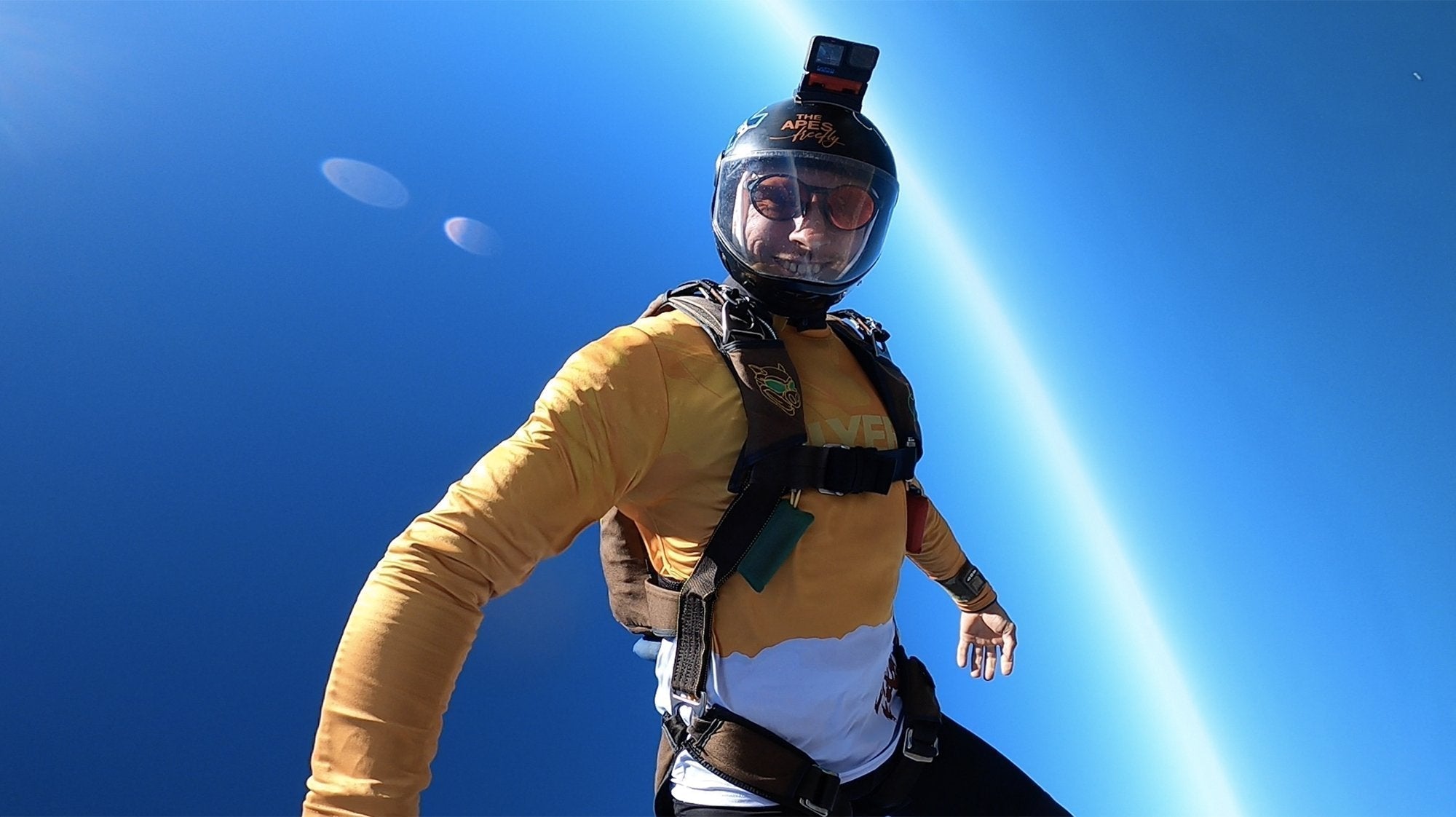
Not everyone wears a full suit all day at the dropzone. On warm days, travel days, boogies or relaxed jump days, many skydivers choose something lighter and easier to wear. A jersey, and sometimes even a T-shirt, can feel more natural when you are packing, waiting, walking around, gearing up, jumping, landing and doing it all again. That is usually where the difference starts to show.
On the ground, almost everything feels fine. But once you are geared up and moving through a real jump day, small details become more noticeable. Fabric shifts. The waist moves under the harness. The shirt may ride up. The material may feel too loose, too tight or simply distracting. That is where choosing the right skydive jersey actually starts to matter. The question most people ask is simple: which skydive jersey should I buy? But the more useful question is what will actually feel right during real use.
But that is not always the most useful question. A better question is this:" What will feel natural, stay comfortable, and require the least attention during real use?" You are not trying to buy a magic piece of gear. You are trying to avoid small distractions: pulling, shifting, riding up, bunching under the harness, or feeling awkward after a few jumps.
A good skydive jersey should feel comfortable and avoid creating unnecessary distraction during the day.
Start with fit
Fit matters more than most people expect. A jersey that is too loose has more fabric that can move independently from your body. It may feel comfortable at first, but under gear it can shift, bunch or ride up more easily. A jersey that is too tight creates a different problem. It may feel restrictive, especially through a long day at the dropzone, when you are packing, walking, sitting, gearing up and moving between loads. The useful middle ground is a fit that follows your body without feeling forced.
Close enough to reduce excess loose fabric. Comfortable enough to wear for hours. That is the fit you are looking for.
Length matters under gear
A jersey can look perfectly fine while standing in front of a mirror. The real test starts once you are wearing gear. A shorter cut may ride up more easily, especially when the harness changes how the fabric sits on your body. That does not mean every short shirt is unusable, but it does mean length becomes more important than it might seem on the ground.
A slightly longer body gives the jersey a better starting point. It gives more coverage under gear and can help reduce unwanted ride-up and shifting during use. It does not guarantee anything. You still need to wear the jersey correctly and check how it sits before a jump. But a longer cut is one of the details that can make the apparel easier to manage.
Fabric should move with you
Fabric is not just about comfort. It affects how the jersey feels through a full day of use. Cotton can be comfortable and familiar, but it may hold moisture, stretch differently, and feel less consistent when worn under gear for longer periods. Lightweight synthetic fabrics usually make more sense for skydive jerseys because they are flexible, easier to print, quicker to dry, and better suited to repeated active use. The goal is to make it feel natural.
A good jersey fabric should follow movement without feeling heavy, loose or distracting. It should stay comfortable between loads, during packing, around the dropzone, and under gear. If the fabric keeps asking for your attention, it is probably not the right choice.
Pay attention to the waist
The waist area is one of the most important parts of a skydive jersey. That is where many problems begin. If the waist is too loose, the jersey may shift more than expected. If the body is too short, it may ride up. If the fabric lacks enough structure or the fit is too loose, it may bunch under the harness. Some jerseys use a slightly shaped waist, longer body length, or silicone grip at the hem to help reduce unwanted movement.
These details are not a replacement for correct wear. They simply support a more consistent fit when the jersey is worn properly. Before a jump, the top should still be properly tucked into the pants and checked under the harness. Jersey design can help reduce unwanted movement, but it does not replace correct wear and preparation. If you are dealing with a shirt that keeps moving or riding up, this guide explains why shirt movement during skydiving is worth taking seriously.
What matters less than people think
Design matters. Of course it does. Skydiving has a strong visual culture, and jerseys are part of that. Colors, patterns, team designs, boogie graphics and personal style all matter because people actually enjoy wearing them. But design should not be the first thing you judge. A jersey can look great and still feel wrong under gear.
Big claims around performance, speed or aerodynamics are also less useful than they sound. In real use, what you will notice most is usually much simpler: fit, length, fabric, comfort and whether the jersey keeps needing attention. The best jersey is not always the loudest one. It is often the one that feels natural for the longest time.
Think about the whole dropzone day
A skydive jersey is not only worn for the jump itself. It is worn through the whole rhythm of the day. Driving to the DZ. Waiting for weather. Packing. Walking around. Gearing up. Jumping. Landing. Talking with friends. Getting ready again. That is why comfort matters so much.
Something that feels fine for five minutes may become annoying after several hours. A small fit issue may become more noticeable after a few loads. A fabric that felt good at first may feel too warm, too loose or too heavy later in the day. A good skydive jersey should work across the whole day, not just in one moment. That is where practical design matters most.
How to choose
When comparing skydive jerseys, keep the questions simple.
- Does the fit feel close without being restrictive?
- Is the body length enough for how you wear gear?
- Does the fabric feel flexible and comfortable?
- Does the waist fit well without allowing excessive shifting?
- Does it stay comfortable and manageable through a full day at the dropzone?
- Does it still feel like something you would actually want to wear?
Those questions will tell you more than most product claims. If the answer is yes, you are probably looking at the right kind of jersey.
Where FLYER jerseys fit
FLYER skydive jerseys are built around this middle ground. They are not full jumpsuits. They are not standard cotton T-shirts. They are shirt-like apparel shaped with more attention to fit, length, fabric and real dropzone use.
The idea is simple: keep the familiar feeling of a jersey, but make it more considered for the way skydivers actually wear apparel around the sport. If you want to compare different cuts and designs, you can explore the full skydive jersey collection.
Final thought
Choosing a skydive jersey is not about finding the most technical-looking option. It is about choosing something that makes sense in real use. A good jersey should feel comfortable, stay manageable under gear, reduce unnecessary distraction, and fit naturally into the way you spend time at the dropzone. Once you know what to look for, the choice becomes much easier. Fit. Length. Fabric. Waist design. Real use.
That is where the decision should start. You can browse the full skydive jersey collection here.
The Evolution of Freefly Skydiving: Impact of Pioneers and Modern Training Methods
Why Jerseys Matter in Skydiving