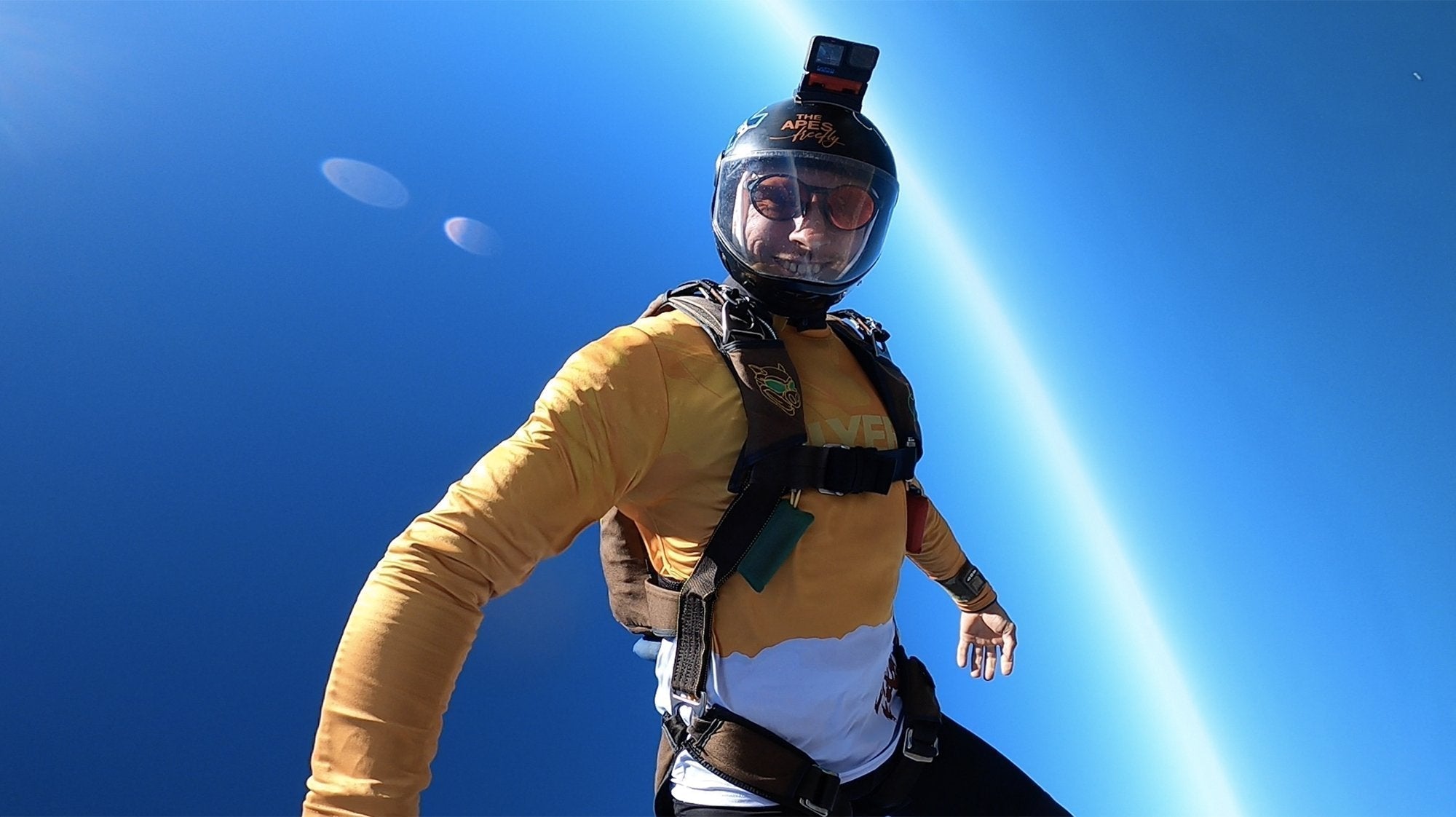

Skydiving jerseys may look similar to regular sports shirts, but the difference becomes clearer once you look at how they are cut, what they are made from, and how they are worn around skydiving gear.
A typical jersey uses a closer fit, a longer body and lightweight flexible fabric. These details help reduce unnecessary shifting and bunching compared with a loose everyday T-shirt, while keeping the garment comfortable through a full day at the dropzone.
That is the real reason jerseys have become a distinct part of modern skydiving apparel. They sit between ordinary streetwear and traditional jumpsuits, combining a familiar look with a fit and construction shaped around real dropzone use.
A regular T-shirt may feel fine on the ground, but it can shift, ride up, bunch or sit differently under a harness. A skydive jersey does not make those things disappear, but it gives the apparel a more considered starting point. That is why jerseys have become such a natural part of modern skydiving apparel.
If you want to see how different cuts and designs compare, you can explore the skydive jersey collection.
Why fit matters
The biggest difference between a regular T-shirt and a skydive jersey is not the graphic. It is the fit.
A jersey is usually closer to the body, slightly longer through the waist, and made from flexible material that can follow body movement without adding unnecessary loose fabric. That does not make it technical gear, and it does not replace good preparation before a jump. It simply means there is less loose fabric moving around when you are geared up.
That matters during real use. Fabric that shifts, bunches or rides up can become distracting. A closer, well-chosen fit can help reduce unnecessary shifting and make the jersey easier to wear through the different parts of a jump day. Before the jump. Under gear. Between loads. Around the dropzone.
Material matters in real use
Most skydive jerseys use lightweight synthetic fabrics, often polyester-based materials. The important part is not the material name alone. It is how the fabric behaves when you move, stretch, layer gear over it, and wear it for long periods around the DZ.
A good jersey fabric should feel light and flexible. It should move comfortably with the body without feeling heavy or stiff. Polyester-based fabrics also tend to dry faster than cotton, which can be useful during long, active days. That is why polyester-based jersey materials make sense in this category.
They are not chosen because they sound technical. They are chosen because they work well for full-print designs, active movement, repeated use and the kind of apparel skydivers actually wear around the sport.
If you want to understand the ride-up problem in more detail, this guide explains why shirts move during skydiving and why it matters.
Style still matters
Skydiving has always had its own visual culture. Colors, patterns, team designs, boogie shirts, brand graphics and personal style all belong to the sport. Jerseys give jumpers a way to bring that visual identity into what they wear. That does not make the jersey only a style piece.
It just means the product has to do two things at once: look natural in the dropzone environment and feel more considered than a regular loose shirt when worn around skydiving gear. For many jumpers, that balance is exactly why jerseys make sense.
They are easy to wear, easy to recognize, and flexible enough to work across different parts of the skydiving day.
Where jerseys fit in the apparel system
A skydive jersey is not a replacement for a jumpsuit. It is also not the same thing as a standard cotton T-shirt. It sits between those two worlds.
More casual than classic technical gear. More considered than ordinary streetwear. Familiar on the ground, but shaped with skydiving use in mind. That middle position is important because it reflects how many people actually dress around the sport today.
They want something they can wear at the dropzone, during travel, around events, between jumps and sometimes during real jumps as well. The jersey answers that need without pretending to be more than it is.
What matters in real use
When a jersey is worn around skydiving gear, the useful differences usually come down to a few practical details: fit, body length, fabric and how the garment behaves through a full day at the dropzone.
A closer fit can reduce unnecessary loose fabric. A longer body can help reduce ride-up, while flexible material makes the jersey easier to wear under gear and during normal movement.
These details do not turn a jersey into technical equipment. They simply explain why a purpose-designed jersey can feel different from a regular everyday T-shirt in the same environment.
If you are comparing different options, the separate guide on how to choose a skydive jersey goes deeper into the actual selection process.
Final thought
A skydiving jersey is ultimately a simple idea: familiar apparel shaped more deliberately around the way skydivers actually wear clothing at the dropzone and under their gear.
The difference comes from practical details such as fit, length and fabric rather than exaggerated performance claims.
If you want to see how those ideas translate into actual designs, you can browse the full skydive jersey collection.
Why Skydiving T-Shirts Are More Than Just Merchandise
The Evolution of Freefly Skydiving: Impact of Pioneers and Modern Training Methods