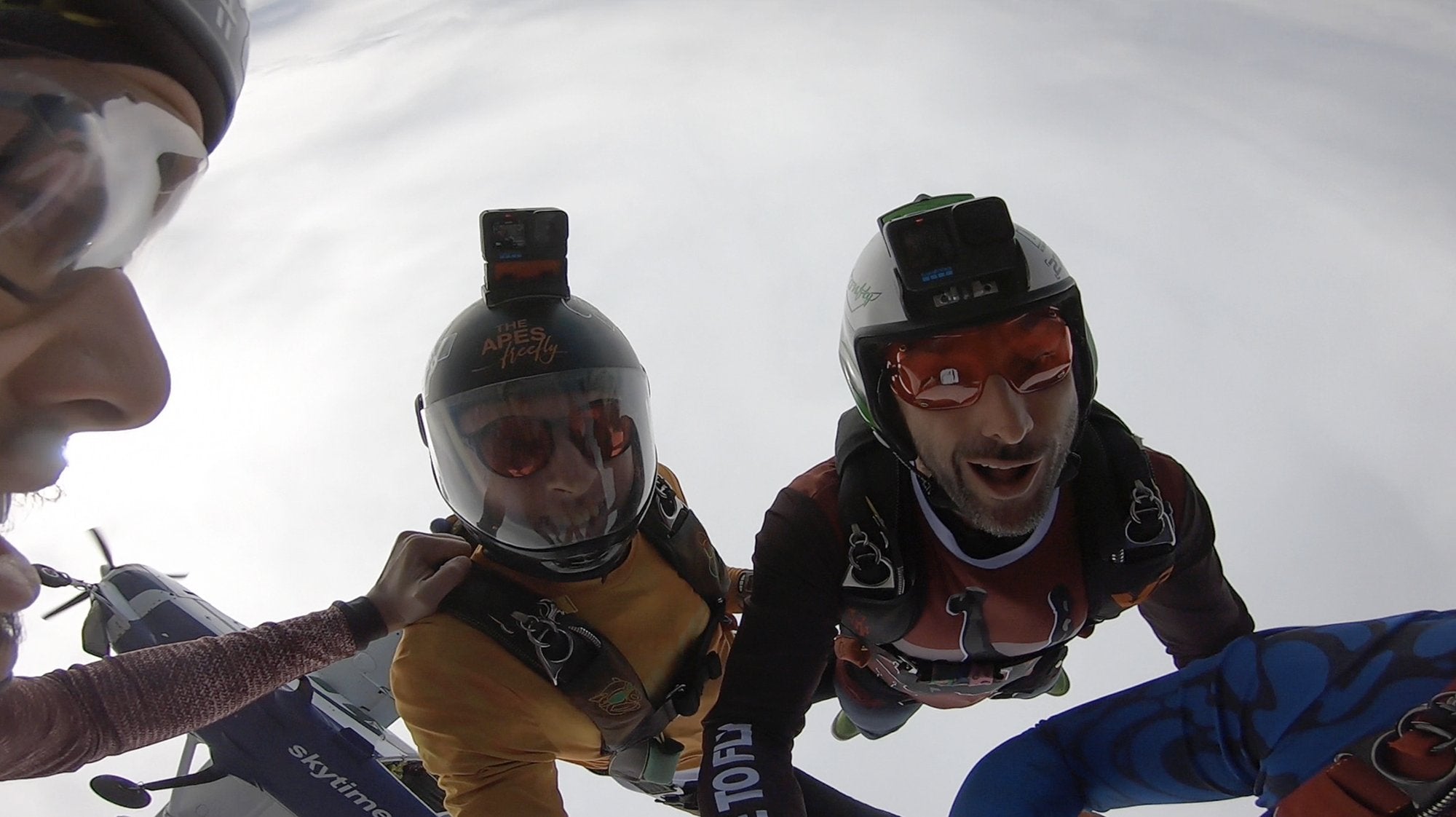

When people talk about skydiving jerseys, material usually comes up early. Polyester. Breathability. Stretch. Print quality. But none of that really matters on its own. What matters is how the jersey behaves once you’re geared up, moving, and actually in the air.
What matters is how the material behaves
A jersey can feel great in your hands and still be frustrating in freefall. Because the real test isn’t how it looks or feels standing still — it’s what happens when:
- you’re under a harness
- the airflow hits your torso
- you start moving dynamically
Some fabrics hold their shape. Some start shifting, lifting, or bunching up. That difference is what you actually notice during a jump. If you’ve ever had to pull your shirt back down between jumps, you already know what this feels like.
If you want to understand why this happens, here’s a closer look at why shirts can ride up during skydiving.
How fabric behaves in airflow
Depending on its weight, stretch and surface, a fabric can behave differently once you’re geared up and moving.
Some fabrics tend to:
- keep their shape more consistently
- reduce excessive flutter or bunching
- feel less distracting as you move
The practical difference is how much the jersey shifts, bunches or draws your attention during use. The material doesn’t change how you fly, but it can influence how the garment itself behaves around your body and under the harness.
Stretch and fit work together
Stretch matters because the jersey has to move with your body while remaining comfortable under the harness.
Too little stretch can feel restrictive.
An overly loose fit can allow more shifting or bunching.
The useful middle ground is a fabric and cut that:
- follows body movement without feeling restrictive
- sits consistently under the harness
- helps limit unnecessary shifting
That balance can make the jersey feel less intrusive during use.
Real use: multiple jumps, not ideal conditions
Most jerseys aren’t worn once. They’re worn:
- across multiple jumps
- in heat
- under gear
- while packing, walking, waiting
Material plays a role here too. Not as a feature, but in how the jersey holds up over time:
- keeps its shape
- doesn’t feel worse after a few jumps
- doesn’t lose its shape or start bunching more as the day goes on
This is where differences start to show.
Print and surface — more than just looks
Print quality is usually treated as a visual detail, but the way a graphic is applied also affects how the surface feels.
With sublimated prints, the graphic becomes part of the fabric rather than sitting as a separate layer on top. That helps keep the surface feel uniform, without thick or stiff printed areas.
It’s a small detail, but one that can become noticeable over repeated use.
What actually matters
Material doesn’t make a jersey “better” in a dramatic way. It won’t improve your flying, and it won’t solve every issue.
What it can influence is the fit, feel and amount of unwanted movement you notice during real use.
That’s the practical difference between a jersey that keeps drawing your attention and one that feels more consistent under your gear.
If you want to see how these choices come together in actual designs and fit, you can explore the full skydive jersey collection.
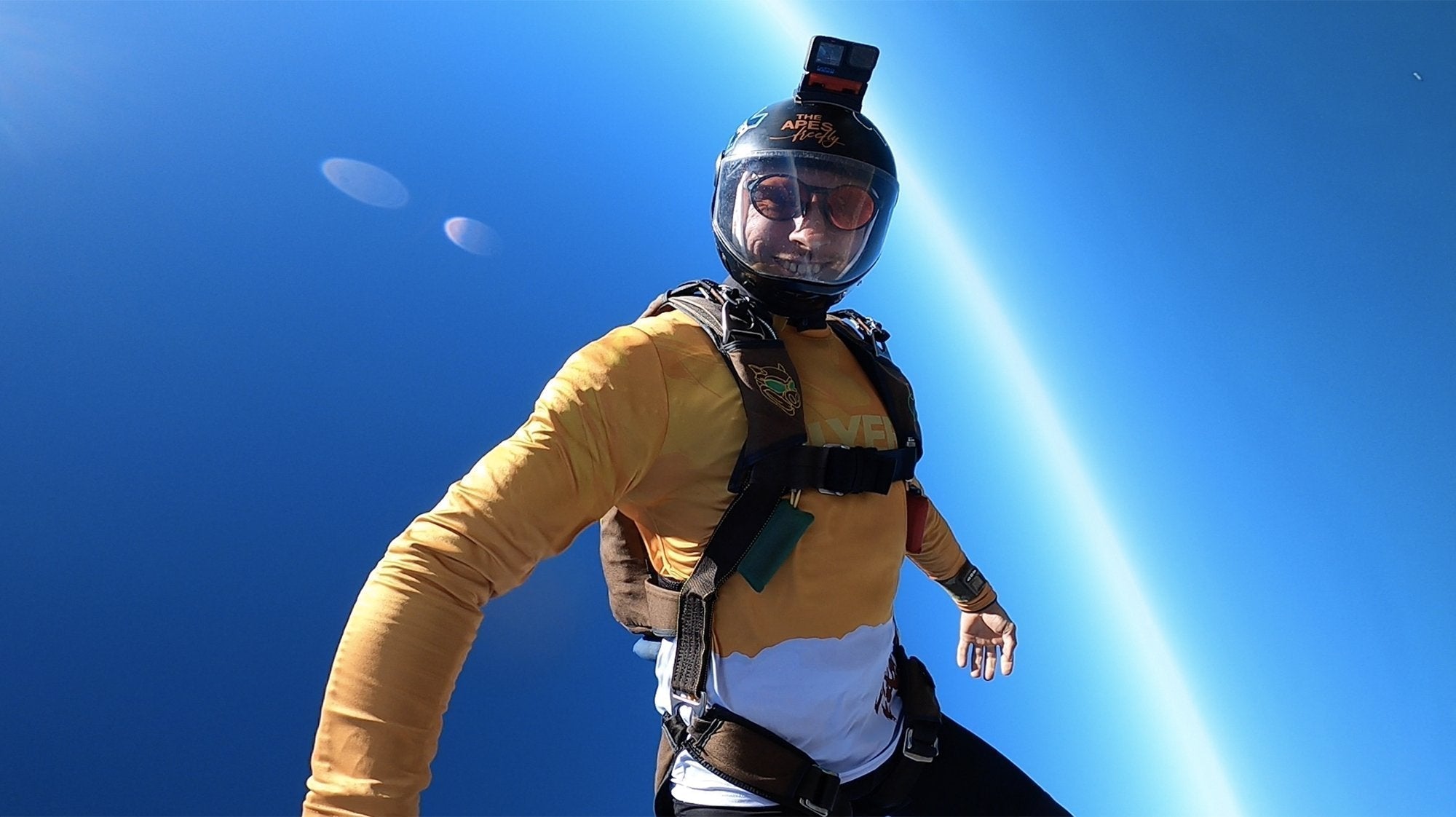
Why Jerseys Matter in Skydiving

Skydive Hoodie: From Streetwear to Skydiving Essential